

THE
MASQUERADE ON THE BEAT
.png)
What exactly is Azzi composing?
The first time I watched Azzi perform, I found myself paying attention to everything except the music. The music was there, of course, but it wasn't the only thing demanding attention.
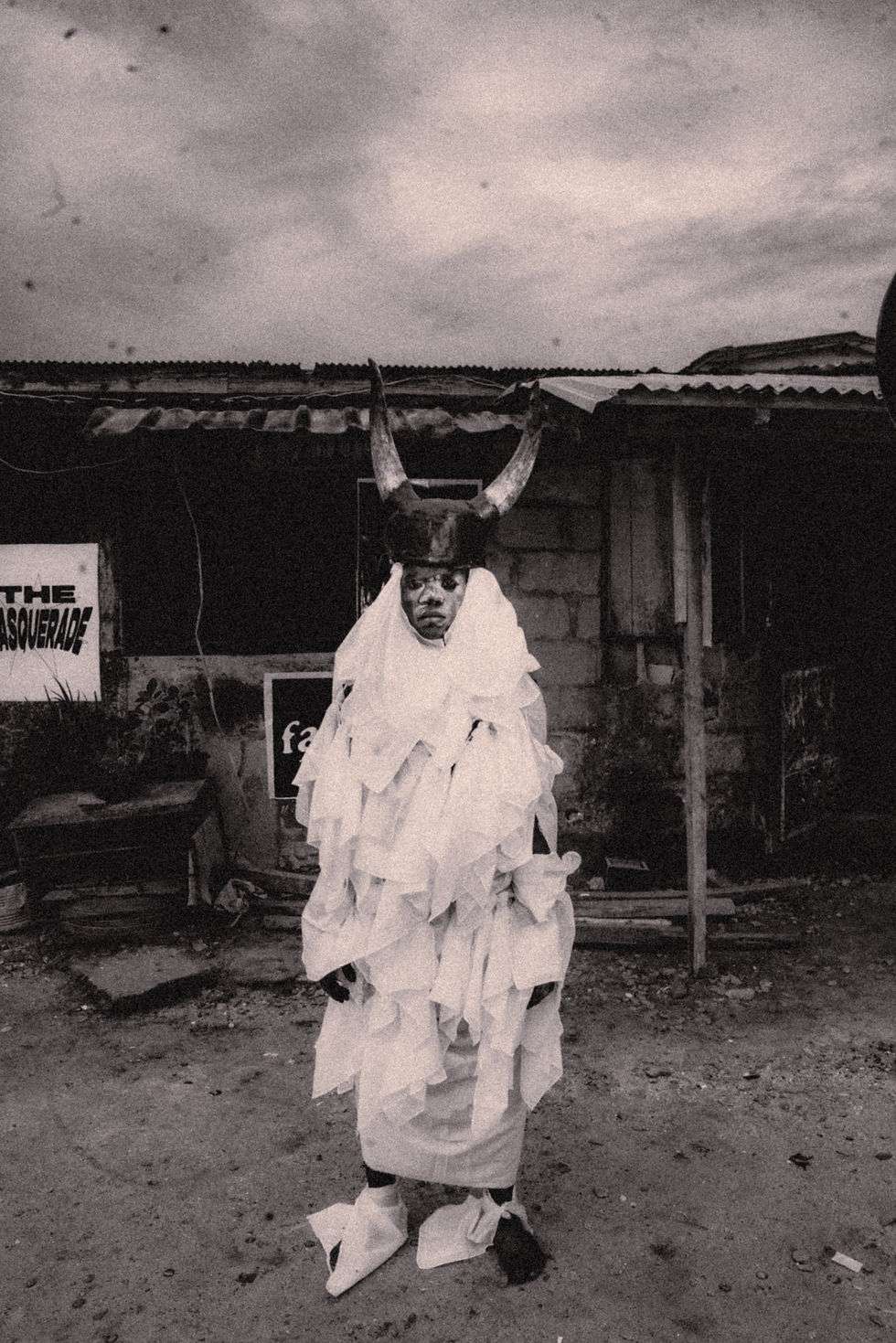
The set didn't begin the way many electronic music performances do. Before a single beat landed, there was already a sense that something had started. A performer wearing a horned headpiece stood almost motionless beneath the lights. Then dancers entered carrying white handkerchiefs. The lighting shifted into silhouettes that made the stage feel closer to a shrine than a nightclub. Every gesture appeared as considered as the sound itself.
It made me wonder if we've been asking the wrong question about Azzi. Instead of asking what kind of music he makes, perhaps the more useful question is: what exactly is he composing?
That question stayed with me throughout our conversation.
Azzi speaks about music the way some choreographers speak about movement. He rarely separates sound from the body that performs it or the space that receives it. When he describes his performances, he begins with lighting, costume, dancers and staging before mentioning the equipment. Even when he speaks about Bariga, where he grew up, he does not begin with roads or landmarks. He remembers movement. People constantly in motion. Streets that demanded quick decisions. The restless energy that made Mara feel less like a genre and more like the tempo of everyday life. Lagos, in his telling, is simply not a place you hear. It is a place you watch, absorb and eventually translate.
I was at your set at Boiler Room in December 2025 at the new Afrika Shrine, and I was blown away.
What did it feel like for you performing on that day?
What was going on inside you?
Amazing feeling. It was an opportunity I had waited for all my life.
I prepared to give my all, and that all is irreplaceable. One of one.

That way of thinking did not begin with the Boiler Room set at the New Afrika Shrine in December 6, 2025, the performance that introduced him to many people. It started years earlier at Footprints of David Art Academy, where dance was his first discipline. There, theatre, music, dance and Nigerian performance traditions were not taught as separate practices. They informed one another. Rhythm was understood through movement before it became sound.
Looking back, it becomes easier to understand why Azzi doesn't fit comfortably inside the category of producer. His musical instincts were formed through choreography long before the music software. His first instrument was the body.
That history also explains what initially feels like a contradiction in his work. Azzi describes his sound as futuristic, yet almost every reference he returns to is familiar: Mara, masquerade, Nigerian performance traditions, Lagos street culture, theatre. He is not interested in choosing between tradition and futurity. Instead, he treats inherited forms as material to be rearranged. The horned headpiece is not costume alone. The dancers are not decoration. The lighting is not just aesthetically pleasing. Together, they become part of the composition. By the time the music arrives, the performance has already begun, audience are already immersed.
Perhaps that's why his work resists easy description. Some people call him a DJ because they recognise the setup. Others call him a producer because they hear the tracks. Neither description fully accounts for what's happening. Azzi is composing attention as much as sound. He decides when the room should pause, when movement should begin, when tension should build and when release should come. During our conversation, he described this responsibility with a phrase that has stayed with me: "I am the remote." It sounds casual until you realise he means exactly what he says. He isn't waiting for energy to come from the audience. He believes it's his job to create it.
At a time when producers are often imagined as people working behind screens in the studio, Azzi is quietly expanding what the role can hold. His practice asks a different question altogether: if rhythm has always shaped how Lagos moves, gathers and performs itself, what happens when a producer begins composing not only beats, but gesture, atmosphere, movement and memory?
That feels like the work taking shape in Azzi's practice. The music is only one part of it.
Below are excerpts from our conversation with Azzi on performance, Lagos rhythm, Mara, and the language he is building through sound.


Your creative journey started at Footprints of David.
When you think about FOD, what is the first thing that comes to mind?
Discipline, creative brilliance, preparation, and culture. I grew up at an Art Academy, “Footprints Of David Art Academy”. This period of training and learning contributed greatly to the Music producer and performer I have become.
During my days at Footprints Of David Art Academy, we practiced theatre all around: dance, Music, and Drama. My first love was Dance. The practice really made me explore rhythms and movement. I am no stranger to the dance scene. The dance and music are always working together. Our Nigerian heritage rhythms from the north, east, and west, as well as dance, are also part of my creation as a music producer and performer.
What have you become more interested in over the last year?
Mara, cultural heritage, and sounds.
What did Lagos sound like before you started producing music? And what narrative of Bariga still appears in your work today?
Lagos has always been a cosmopolitan space, and that was how I met it. My sound revolves around the Lagos street culture, fast-paced, aggressive, and energetic. Bariga was crazy sometimes; you can’t spend time outside without being on the Run. Bariga, Wahala. My area has more connection to Mara, due to its continuous movement, standing out, being a creative genius, Beautiful Chaos, and energetic.

You describe your sound as futuristic, but a lot of the references you mention come from everyday Nigerian life. Where do those two worlds meet for you?
My sound, my work. My sound is a reflection of everyday Nigerian life, street culture, raw, undiluted, energetic, aggressive, a sound that can’t be boxed. My style of sound can fit into every area. It is similar to EDM and techno. It doesn’t need to explain itself. But one constant thing is that it is continually evolving, moving beyond imagination, the future.
What sounds do most people ignore that you find yourself listening to?
Calm sounds, emotional sounds, nature.
When creating, what usually arrives first?
melody.
You mentioned that many of your releases begin during home sessions and live performances. At what point do you know that this is the sound?
Yes, my home live sessions and live performances birth most of my releases, because my process of working is experimental. So, knowing the sound that moves, I leave it for the listeners, fans, and audience to decide. Sometimes, people love the work that I don’t. Anything I play or create, and I am not satisfied with it, I am too serious about it.


" Music is people-driven.
The listeners and audience are primary."
What are you trying to satisfy when you’re making music or performing live?
Music is people-driven. The listeners and audience are primary.
What does experimentation mean in practical terms for you?
Every sound is important
Your performances seem to involve more than sound. The horns, lighting, the appearance of dancers behind you, your styling, all appear to operate together.
You make producing look cool. How did this particular identity or language come about? And why?
Azzi is culture-driven. I reflect it in my performance and my identity.
My aesthetic is a different look for the audience. The horn is a performance, the light is a performance, the dance is a performance, the sound is a performance, all of them are part of my performance. I am culture-driven. I can say this all came from my training at FOD; most of our work was traditional or culture-based. We studied several Nigerian cultural and traditional dances and practices. These studies mould the idea of my branding, a symbol and reference to my roots. But the why really is that I am drawn to masquerades, and the gods for me are a very significant symbol as a performer. The masquerade represents a form of sanctification for me. My headgear is a representation of all the African gods. A reference to my roots as a Nigerian and as an African.
So, I, as the masquerade, mean I can be hyperactive and dynamic.
When the audience sees you wearing the horn, what do you hope changes in the room?
The Big Masquerade is here. Be prepared to witness the extraordinary.

You said something that I think is interesting when we last spoke: you said, “I am the remote.” What does that mean? What responsibility does that come with?
As the remote, I am the one in control; I am responsible for the action exhibited by the audience. So I give my energy to the audience. I don’t wait to receive their energy to perform. And I continue to give till you scream “Azzi take am easy”.


What do you pay attention to while you’re performing your set?
My intro. Always paying homage to my roots.
Performing wonders.
What role does mystery play in your work?
At my live sessions or performances, my works seem to be a mystery to the listeners. My sound just has its way of connecting to everyone who listens, mysteriously, especially when your body begins to move in ways you never imagined. Some will say, “Even if we Shazam am, we go see am, na one of one”
What are you researching, listening to, watching, or collecting these days?
Currently researching sounds that resonate with the European rave and music audience regarding my European tour in July 2026. Creating new sounds, preparing for my headline event, ONE NIGHT, ONE GATHERING in August, 2026
Has there been a moment when the audience misunderstood your session differently than you intended?
A Live beat performer. Some people think I am a DJ and often call me a DJ, which I am not.
What part of your practice do people misunderstand most often?
Yes, there have been such moments. The audience couldn’t fathom the sound they were hearing. It was new to their ears; I brought a whole new energy to them, and all they did was receive.


" Lagos has always been a cosmopolitan space, and that was how I met it. My sound revolves around the lagos street culture, fast-paced, aggressive, and energetic."
" I am a Live beat performer.
Some people think I am a DJ and often call me a DJ, which I am not "
What kind of performance have you imagined but don’t yet know how to make?
So many ideas in my head, likewise my team. And we are making it happen little by little
Five years from now, what would surprise people about where your work has gone?
Azzi pioneered an underground sound and street culture, from the heart of Lagos, Nigeria, to the global scene. One of Africa’s most valuable and greatest artistic exports.
AUTHORED by
FAITH OT OKOH
AUTHORED by
FAITH OT OKOH
photography/creative director
yemi osokoya
stylist
natywayz
project manager
chidera nwobodo
During my days at Footprints Of David Art Academy, we practiced theatre all around: dance, Music, and Drama. My first love was Dance. The practice really made me explore
" Yes, my home live sessions and live performances birth most of my releases, because my process of working is experimental."
" My aesthetic is a different look for the audience. The horn is a performance, the light is a performance, the dance is a performance, the sound is a performance, all of them are part of my performance. "