
editor in cheif
faith ot okoh
photograpy
project manager
chidera nwobodo
credits
yemi osokoya
faith ot okoh
Edited by


"New Flower."
FAITH OT OKOH
AUTHORED by
Addis Ababa means "New Flower."
The name belongs to Ethiopia's capital city, but it also belongs to a Ghanaian dancer whose relationship with movement often feels less like performance and more like nurturing. Spend enough time with Addis, and you begin to notice a quality that appears both in her personality and her practice: an openness to becoming. She laughs easily. Speaks with certainty. Moves between childlike curiosity and unusual conviction. There is a softness to the way she approaches people, but also a stubbornness underneath it. The kind that allows someone to spend months chasing a question simply because it refuses to leave them alone.
When we speak, the conversation rarely stays in one place for long. It moves between family stories, prayer, movement research, Ethiopia, flowers, memory, and the peculiar experience of carrying a name given by her pan-African father, a name that constantly asks Where are you from. Again and again, she returns to questions rather than answers. Perhaps that instinct began at home. Born into a Royal family of four children: three girls and a boy, Addis grew up as the second child of her beautiful parents from Ada, a coastal town in Ghana’s Greater Accra Region where land, river, and sea seem to exist in constant conversation with one another. It is the kind of place where mornings arrive with the scent of salt in the air, where fishing boats cut across the horizon, and where community life unfolds in ways that are both gentle and deeply rooted. There is a warmth to Ada that feels reflected in Addis herself; an openness, a playfulness, and an ease with people that never feels forced.
She speaks about home with a particular pride. Not just because it is where she comes from, but because it taught her how to belong to something larger than herself. That sense of community, celebration, and cultural continuity remains visible in the way she moves through the world today.
If her home and family had grounded her, Achimota School expanded her imagination. Mention Achimota, and her face brightens almost immediately. She speaks about the school with the affection of someone who genuinely enjoyed being there, the iconic green-and-white uniform for junior and the red-and-white for the senior girls, “Our school house uniform is yellow with green flower patterns. It is called SUNSHINE. Everyone wore this uniform when they were not going to class. I was in Kingsley House, and our color is Yellow. The best Female house in the East”, she says, smiling. She emphasized culture and the arts, the performances, traditions, and activities that brought students together beyond the classroom, and how much she missed them so much. More importantly, she appreciated that Achimota was a mixed school. She often reflects that an all-girls environment might not have suited her personality. The balance of different perspectives, friendships, and interactions allowed her to grow in a way that felt natural to who she was becoming.
After Achimota, she continued her studies at Radford University College, where she studied Graphic Design and majored in videography and Animation, carrying with her many of the values that had shaped her earlier years: curiosity, confidence, openness, and a willingness to engage people and ideas on her own terms. Long before dance became her profession, art was
always intertwined with her daily life. It was a vital part of her family and her world, reflecting her deep connection to creativity and love. Listening to Addis describe those years with her family, school, and her environment, it becomes clear that many of the things defining her practice today were already present then. It's not just about dance itself, but about cultivating a gentle attitude toward observation. Embracing imagination, developing a habit of attentive awareness, and approaching ideas with a playful spirit: all with kindness and understanding.
Faith appears quietly through her story and is considered part of the architecture of how she works. She speaks of prayer, worship, and reflection as movements of the heart. For her, the dance studio comes later. What comes first for her is the question, one that's tender, close to her, and honest. Then the research. Then the slow, brave attempt to live inside an idea long enough to understand what it’s asking of her. That process became especially visible during the creation of Addis in Ababa, a piece born from a simple, vulnerable curiosity: why was she named after a city she had never fully understood?. That question led her softly into visiting Ethiopian restaurants, engaging in conversations with strangers who shared valuable insights with her, exploring the country's music archives, dances, visual symbols, colors, the shapes of flowers, and the weight of religious histories. Ethiopia is a Christian-majority country, and as a Christian herself, she felt a quiet pull toward the sacred and communal shape of things: the circular gathering of a meal, the geometry of petals, the cleansing that comes after the rain. But she never wanted to borrow from another culture. Instead, she seemed to long for something more tender: understanding how one culture can sit beside another without either one having to disappear. A nation that was never colonized and a nation known for its pan-african beliefs.
But what stays with me most is her relationship with truth. At one point in our conversation, I asked what she searches for in the dance studio. Her answer came quickly, from a soft and certain place: "The feeling." She paused. "The truth." Not perfection. Just the truth. It is perhaps the simplest, most heartfelt way to understand where Addis is right now, an artist following her questions wherever they lead, trusting that the work will reveal itself in its own time, like a tree finally ready to yield fruit.
Below, we catch up with Addis Ababa about family, dance, her dance production Addis in Ababa, and the story behind her name Addis Ababa.
Where did you first encounter dance in your life, and what was happening around you at that time?
I encountered dance in my Home. My family loves art in every form and knew that I was born with the gift of Dance.
In my home, my grandmother always used to have a concert for the children; she would set up an actual stage in the middle of our street during Christmas. My mother’s little sister was always in charge of our costumes, music and rehearsals. We have people in the community coming to watch our performances. Other kids and adults also signed up to perform at our concert. I loved these times.
As a child, I knew I had a gift, and I gained more understanding of my gift during the period of my mom's passing. I remember going into a room at 9years, kneeling in front of a wall and banging with God! I told Him, He took something important in my life, and He has to replace it with something really Special. I came out of my room, never cried, never talked for days. The only thing I did was dance to express my feelings. My movements were different, it carried so much power, emotion, and presence. I was often called a mad child or girl because of my new language that was not of this world, and it still isn’t.
Kehinde (Member of Slaytwins):
Being identical twins means we understand duet and doubling as a language. We can finish each other’s phrases in movement.
Taye (Member of Slaytwins):
It also pushes us to explore individuality within sameness, how two bodies can carry one story differently… That has shaped both our choreography and the way we think as artists.
Taye (Member of Slaytwins):
With Echoes of Our Ancestors, we’re digging into memory, lineage, and what it means to carry history in your body when you’re from the Niger Delta.
" In Ethiopia, I learned to be where you come from first, so I don’t get drowned in a beautiful culture that is not mine."
Making an impact wherever I go; knowing that I bring forth “healing” to people continues to drive my work
"I come from a Royal family, and in my Tribe (ADA), all movements are Graceful. Fingers are used to mostly express how one feels, as well as the Arm."


What were the earliest influences around you that shaped your understanding of movement or performance?
Since my family is a lover of art, they were my influence. My Grandma sings and tells beautiful stories; my dad loves music too. My mom was all about the acting and always pushed me to mime the stories of my grandmother. My aunties were more interested in costume designing and rehearsing movements till you can’t forget.
I gained understanding from God! It was His plan all along. That’s the reason why He put me in this beautiful Family.
The movements that come out from me with the understanding of how performances are made are visions from God. I receive these visions and ideas when I spend time with Him through prayer or Worship. Sometimes they come to me in dreams, and most times He puts these ideas in my spirit.
Hardly do I follow any worldly rules. I only follow what He gives me. Sometimes they are similar to what others say.
Looking back now, what from your childhood or upbringing still appears in your work today?
Being different, very playful, and listening to oneself.
My siblings and I were always given the same assessment or problem to solve, and I remember my Dad always loving how different I thought and always encouraged us to do that. My parents always encouraged us (my siblings and I ) to have open minds about things or ideas. I was also taught not to have any fear, always speak up, ask questions for a better understanding of things, be honest and transparent, and have integrity. Everyone is held accountable in my house, whether old or young, adult or a child.
I find myself doing all these things in my work or when I’m working.


What does your practice as a dancer look like on a daily or weekly basis?
My practice as a dancer is researching certain interesting movements and techniques and practicing it till I find an interesting texture that I want to develop.
This requires me to write or draw a lot in my books, seeing, picturing, or replying to everything I have seen concerning the movement or idea, then becoming it or living it.
I also practice with other dancers in the community to learn and share
When you are in the studio or rehearsal space, what are you usually searching for?
I am always searching for the Feeling (Truth).
Can you walk me through how a movement idea becomes a finished production?
With me, there is nothing like a finished piece. There is always the foundation of a dance piece. Some elements may change, but not purpose, direction, or reason. It first starts as a vision or a problem I want to solve, or an interesting topic in my life I want to share with people. I do my research about what I want to talk about; research about the topic and the specific movements.
This research includes writing, reading, taking pictures, drawing, and moving. In that moment, I find the Truth or my Truth, allow it to become part of me, and live in it.
How do the environments you move through- streets, studios, stages, shape the aesthetic of your work?
The environment is where I find my answers to the questions I ask during my creation process. It has a major impact on my performance and research.
With the creation process of “Addis In Ababa”, I had to visit markets, Ethiopian restaurants, etc to actually live or experience the Ethiopian culture myself.


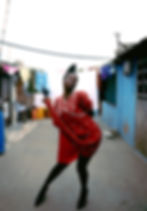
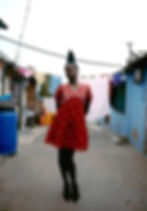
Yes, there are cultural references that consistently influence my movement. I come from a Royal family, and in my Tribe (ADA), all movements are Graceful. Fingers are used to mostly express how one feels, as well as the Arm.
Are there visual or cultural references that consistently influence your movement vocabulary?
Dance means Freedom to me! Being able to express the rawness of the rhythm to your heart beat.
Beyond performance, what does dance mean to you when thinking about the body and the world?
What ideas or questions tend to return in your work?
Is this what I stand for? Or was I Truthful?
What do I want to say to people?
Let me do something visible to everyone, yet people can’t notice.
What is so powerful to discuss yet is being abandoned?
Is it exciting to talk about my work?
To stay true to myself, which means always speaking the truth, no matter what the outcome may be. In Ethiopia, I learned to be where you come from first, so I don’t get drowned in a beautiful culture that is not mine. The Ethiopians are always Ethiopians first, and they take pride in their culture. I had to learn that from a place I am named after. I had to apply this same principle in Burkina Faso. These countries are rich in a beautiful culture, which I enjoyed deeply, but every time I had to perform, I made sure to have my culture as my foundation.
You have taken your work into different cultural spaces. How have those experiences shaped your understanding of your practice?
Maintaining my artistic identity while navigating different cultural contexts became challenging at a point in my life and career because I was living with whatever I was working on. I still love my work!
I took time to identify who I am and what my core purpose is, what my values and morals are. I identified or found my community. Experimenting freely and intentionally with different ideas and cultures without compromising your purpose.
I know who I am, what I stand for and where I’m going.
How do you maintain your artistic identity while navigating different cultural contexts?

Questions like why I was named after the city Addis Ababa?
What is the history of the Name Addis Ababa and the culture?
What does the name mean to the people of Ethiopia and to me as a Ghanaian Artist?
How is their music and dance similar to or different from Ghana’s?
Why is the Flower important to the Ethiopians, and what does it symbolize?
How do I blend these two different cultures without deviating from the purpose of what I want to see and show to the world? I also looked at the 1-dimensional shape of the flower and matched it with something that is common in their culture, which is sitting together in a round and sharing a Moseb of injera. I looked at the shape of the food and the shape of the flower. I also found out during my research that the Addis Ababa (New Flower) has eight petals, and the number 8 in the Holy book (The Bible) represents “A New Beginning”. It all made sense to me why their new year is after the rain when the “New Flower” is blooming or has flourished. Ethiopia is a Christian-dominated country, and as a Christian, this made so much sense to me. This particular research was the visual aesthetic of my project “Addis In Ababa”. An example is using a warm yellow spotlight, having the color of the flower, and creating the rounded shape on the floor or dance mat.
ADDIS IN ABABA is an experimental dance music piece about a Flower that was a seed in the ground where silence and quiet thrive. Then, after the Lord blesses the hard ground with water, making the ground soft for the seed to germinate, the Lord takes away the rain and blesses the New Flower with the sun. The movements of the flower are strong, soft, elegant, powerful, beautiful, and lots of stillness or slow movements. I created the music of the Moseb Band from Ethiopia and Birukti, a Violinist also from Ethiopia. I created music with these beautiful Music artists, and the process was amazing. I also took dance classes from Ethiopian Traditional dancers. I taught them one Ghanaian rhythm (Dance and Music), and that alone was a beautiful cultural exchange.
What questions or ideas were you exploring in your work in Addis Ababa?
What did that process reveal to you about where you are right now in your practice?
The process revealed how curious an Artist I am right now and how personal my art is to me.
It also revealed how it is possible for me to use my art to unite Africa.
I have always known I am Pan-African, but this process gave me the idea of how to use my Gift to unite Africa.
Growing up and working in Ghana, what attitudes toward dance have you encountered, and how have they shaped the way you move through the world?
I have noticed that people in Ghana do not have TIME to learn. They do not want to go through any process, or do not know how to take their time and actually break down movements
Growing up, I was taught to speak up only if I had something to say and to make sure what I said was relevant. This is a character and habit that has positively shaped the way I move through the world.
In dance, I give when I have to with no pressure from “outside”.
What are you currently experimenting with that audiences might not see yet?
Taking pride in identity and Uniting Africa through arts.

What continues to drive your work right now?
Making an impact wherever I go; knowing that I bring forth “healing” to people.
When people look back at this moment in your career years from now, what do you hope they recognize as beginning here?
I hope they recognize how special and different my path is.
If you could speak to your five-year-old self, before expectations, before the industry, what would you tell them about the journey ahead?
You will meet a lot of liars who will make you question yourself. These people will somehow make you appreciate the light you shine; the truth you speak. Always keep a positive vibration because the future is Bright, you are Different and Special, and you know it. Don’t try to fit in! Let His will be done in your life.
I have always known I am Pan-African, but this process gave me the idea of how to use my Gift to unite Africa.
What changes personally and generally when your work moves between local and international audiences?
Personally, Nothing changes in terms of my process of work and my work itself, but what changes generally is how people accept my work. The quality of the environment and space (people) changes in terms of how people receive and show interest in the work I produce, but the work itself does not change. It is always the truth and nothing less than that wherever I go.
I would say I have gained more knowledge about how different people in different positions think and how things are done in these different spaces. I try my best to stay grounded and truthful to myself.
What kind of future do you imagine for your practice?
To have a skills training school. I imagine teaching the youth a deeper understanding of movement, not just in dance but also in other disciplines.